Home repair services platform
Uber-like PWA with separate flows for customers and service providers on the same product.
- Role
- Full frontend
- Technologies
- ReactTypeScriptRedux ToolkitWebSocketsTailwind CSS
Context and problem
One product with two very different users: the customer who requests a repair and the provider who handles it. Each one needs their own flow without duplicating the application.
My role and scope
I built the frontend of both flows: service requests, status tracking, profiles and ratings.
How it works
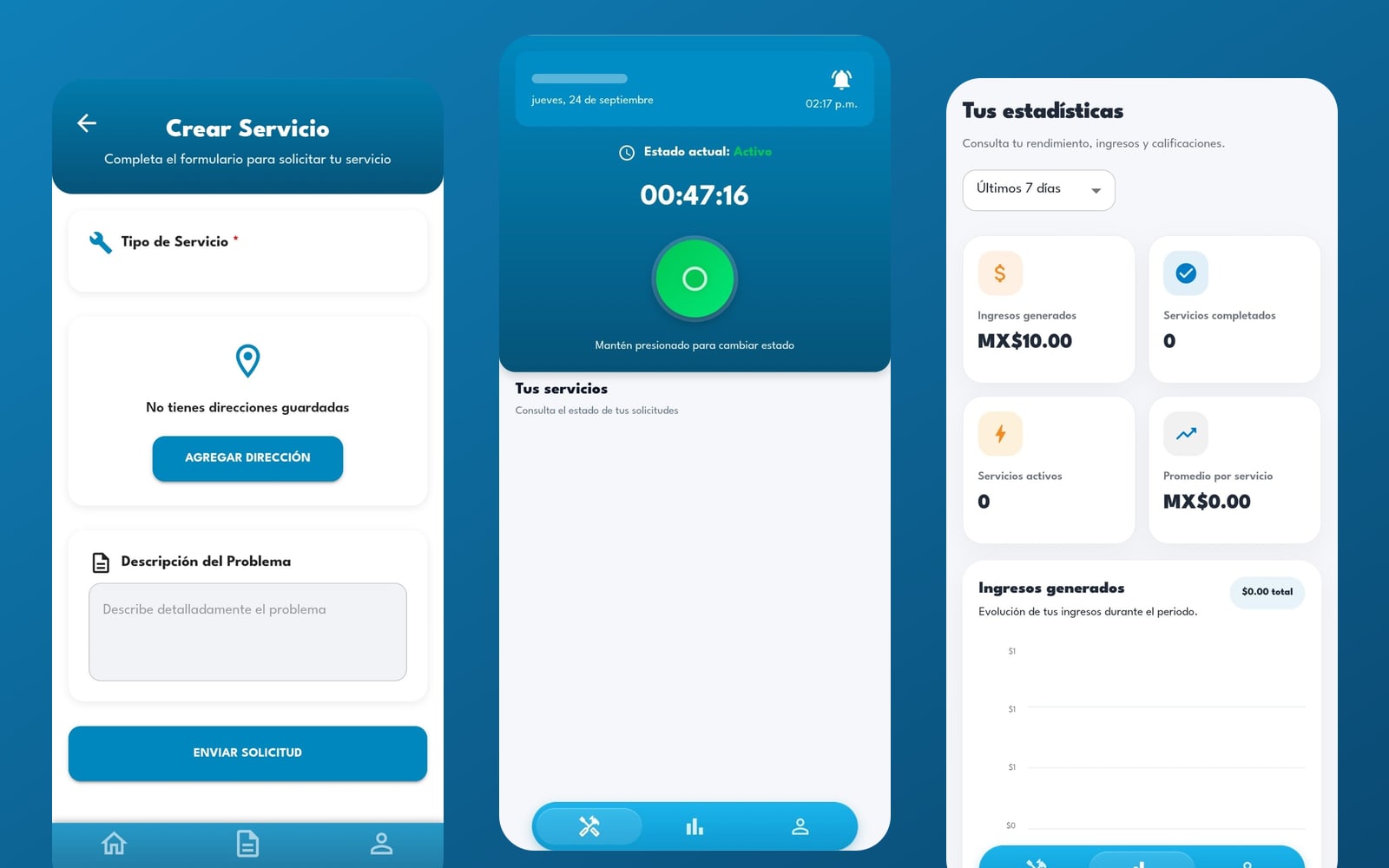
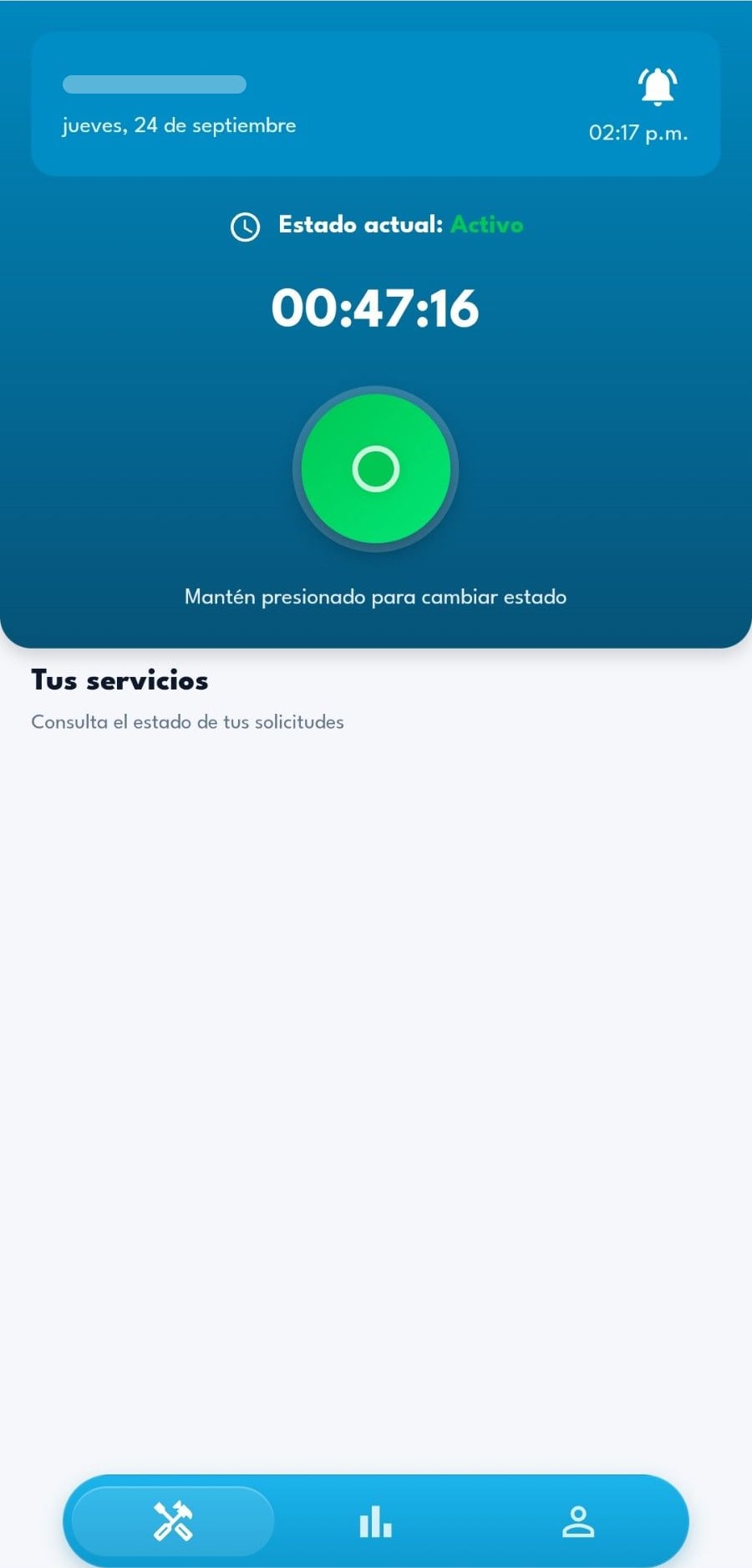
Each type of user has their own navigation: the customer uses a classic bottom bar and the provider a floating bar.
Customer app
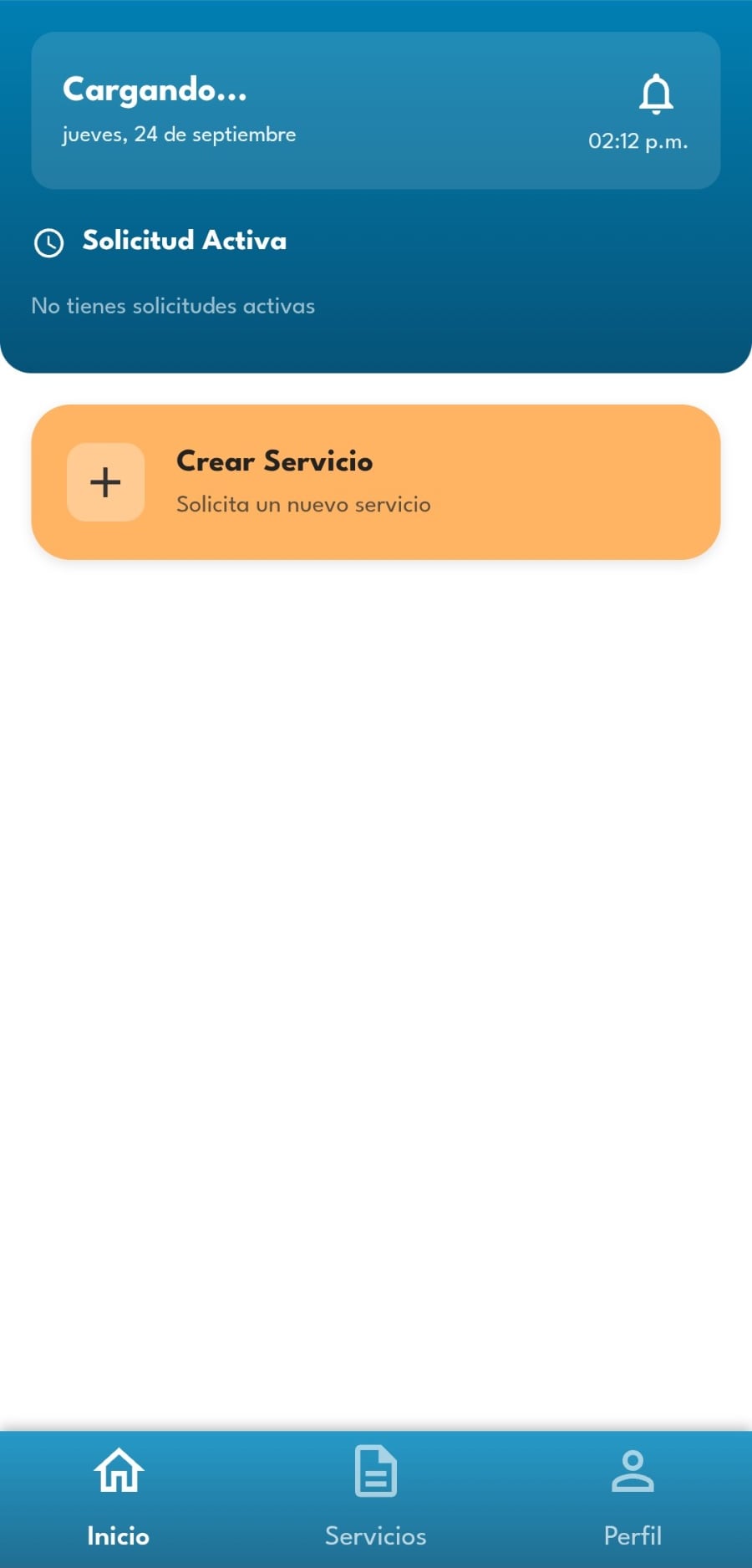
- Home. Shows the active request and a shortcut to create a service.
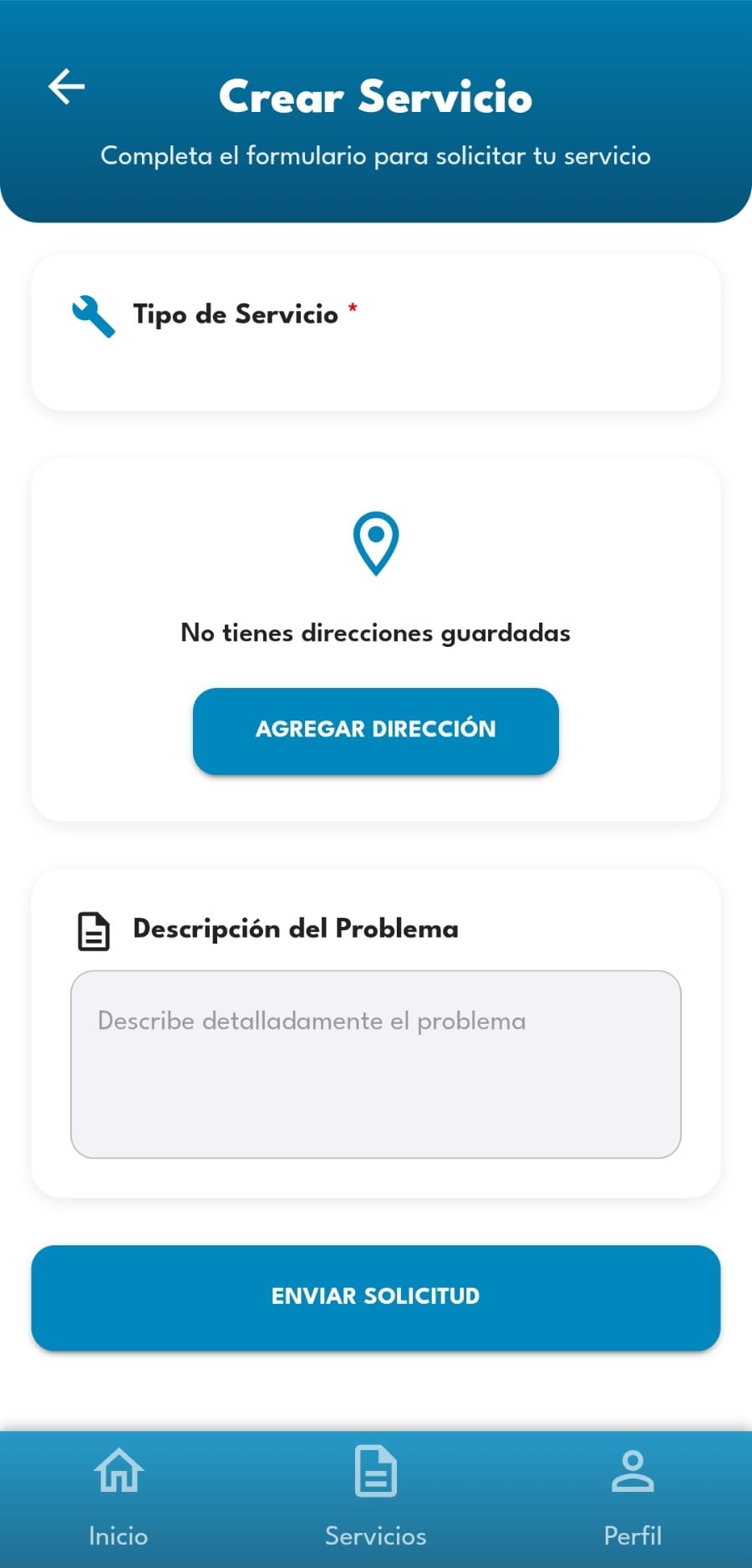
- Create service. Service type, saved address and a description of the problem. If there are no addresses, it offers to add one right there.
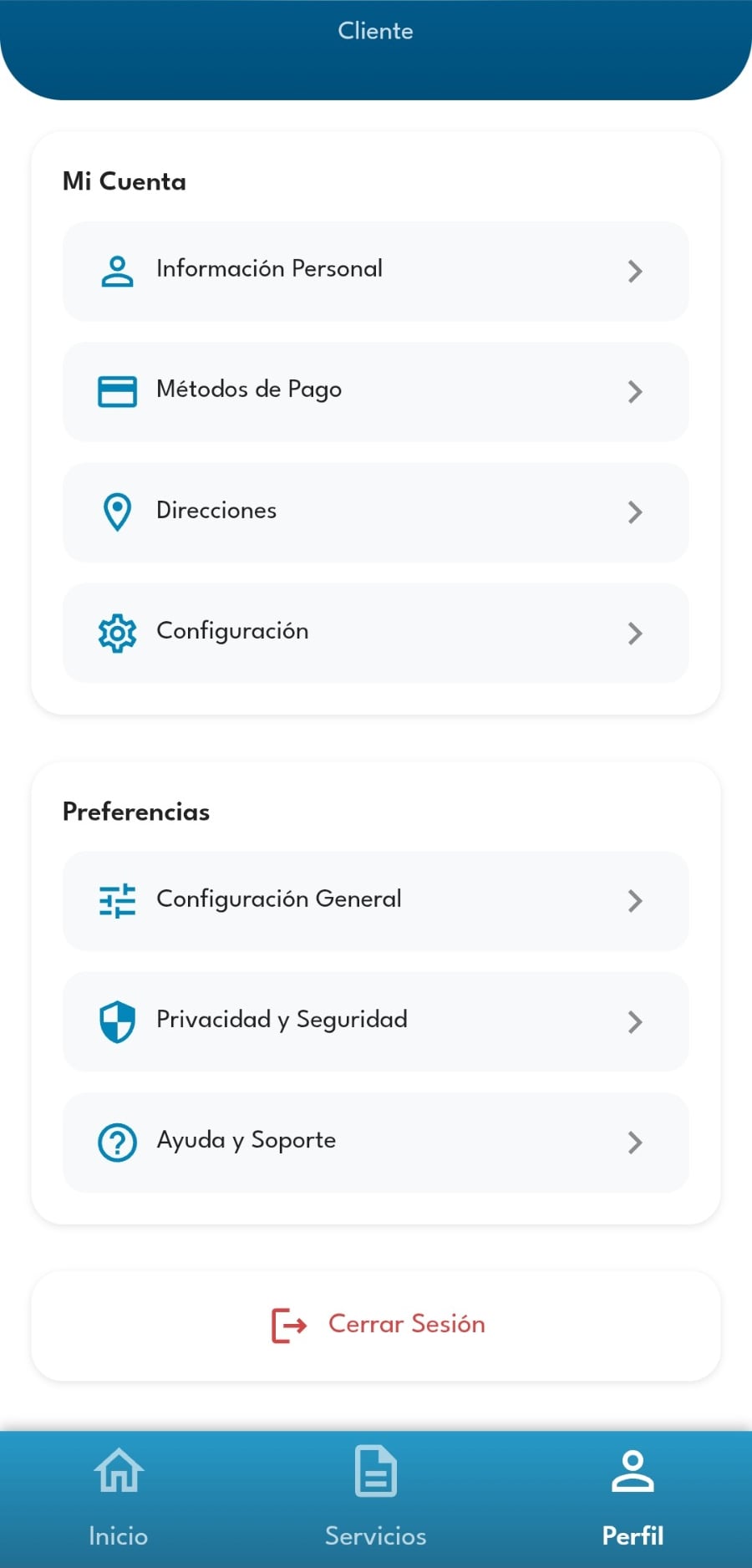
- Profile. Personal information, payment methods, addresses, settings, privacy and help.
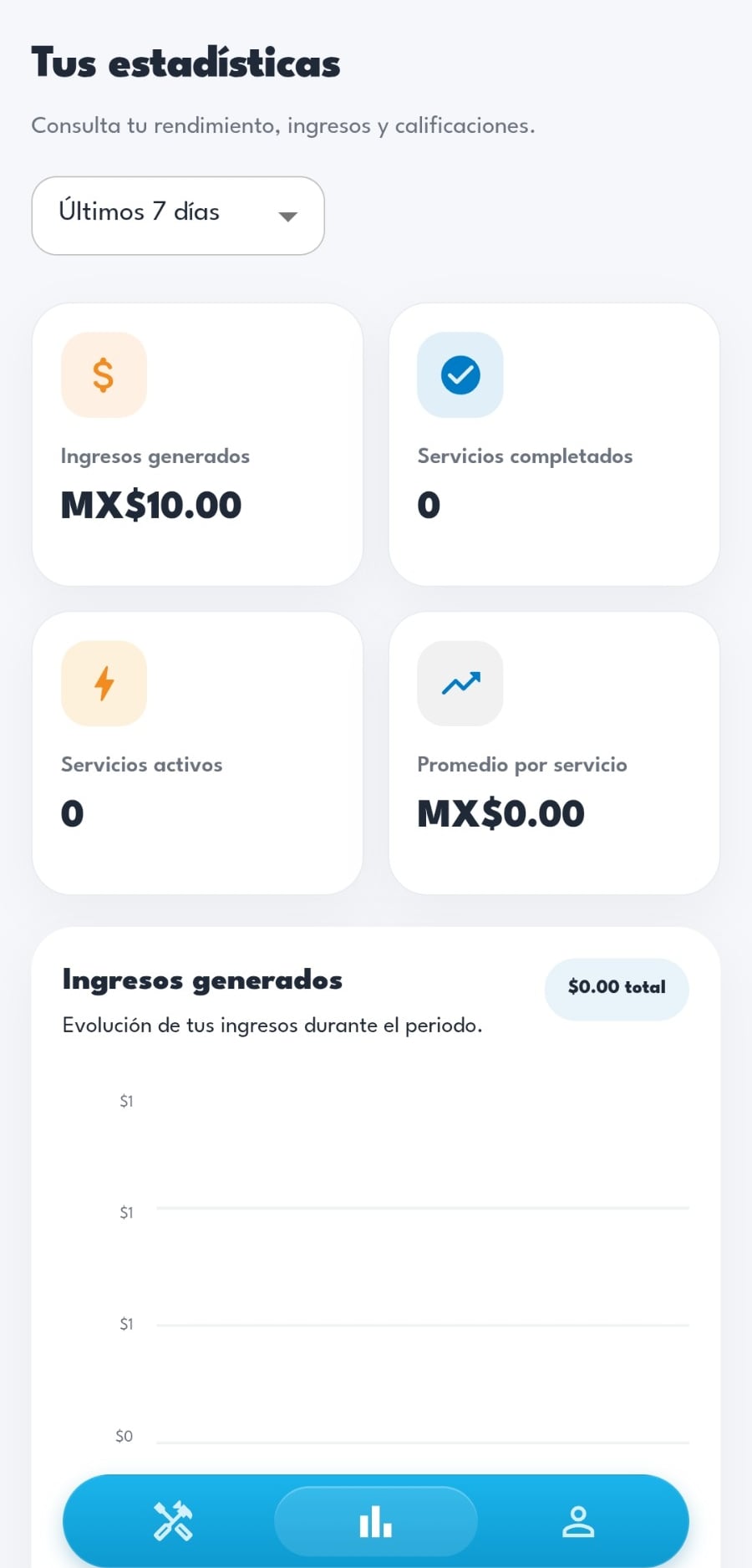
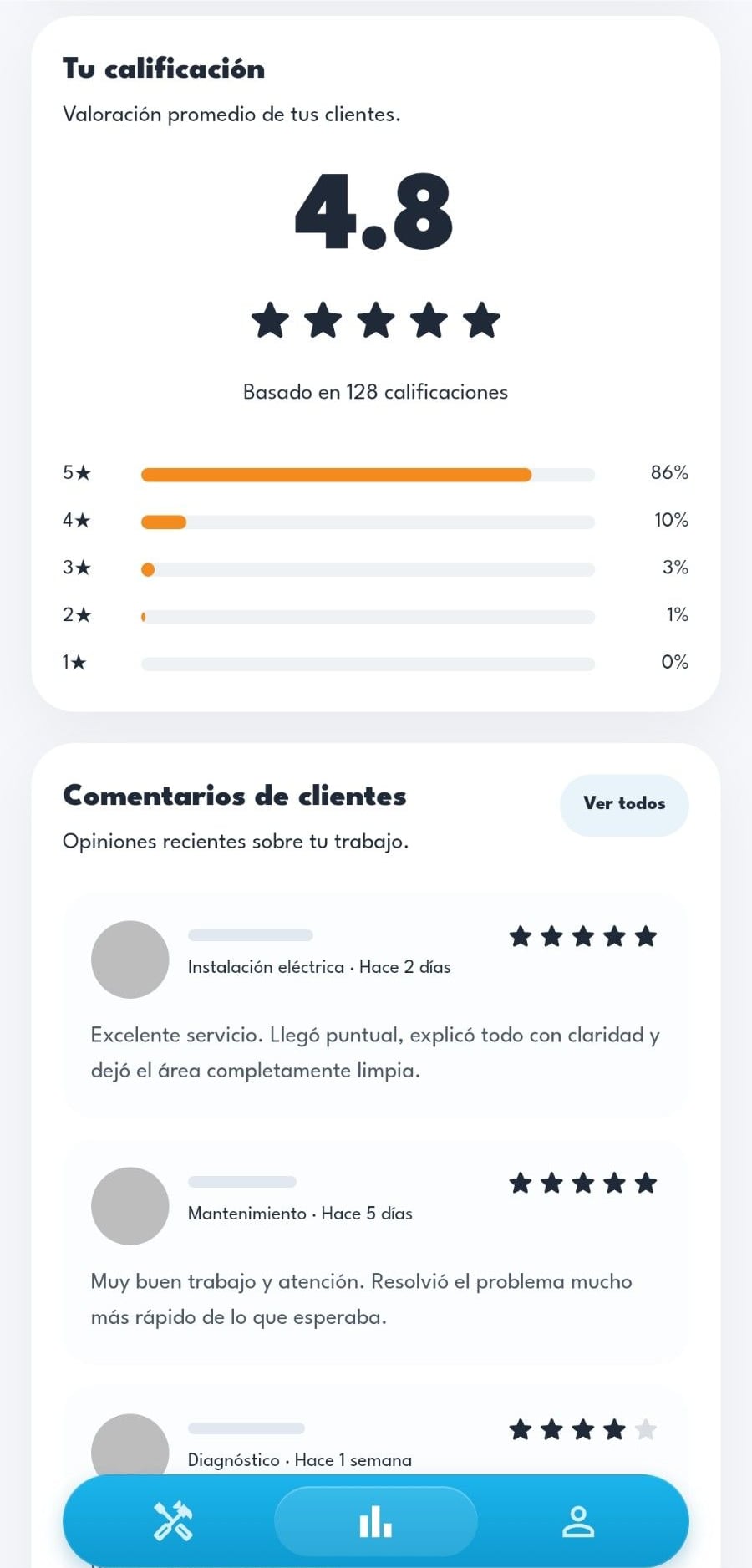
Provider app
- Availability. The provider holds a button to go active or inactive, and a timer shows how long they have been active.
- Statistics. Income, completed and active services, and average per service, with a period filter and an income chart.
- Ratings. Average, distribution by stars and recent customer comments.
Technical decisions
- Separate flows per user type on a single codebase, each with its own navigation and screens.
- Status tracking for every request, visible to both the customer and the provider.
- State with Redux Toolkit, REST API with Axios and JWT authentication with protected routes.
- Responsive, mobile-first interface with Tailwind CSS.
Outcome
A PWA with two complete experiences, the customer's and the provider's, built on the same product and ready for its pre-launch phase.